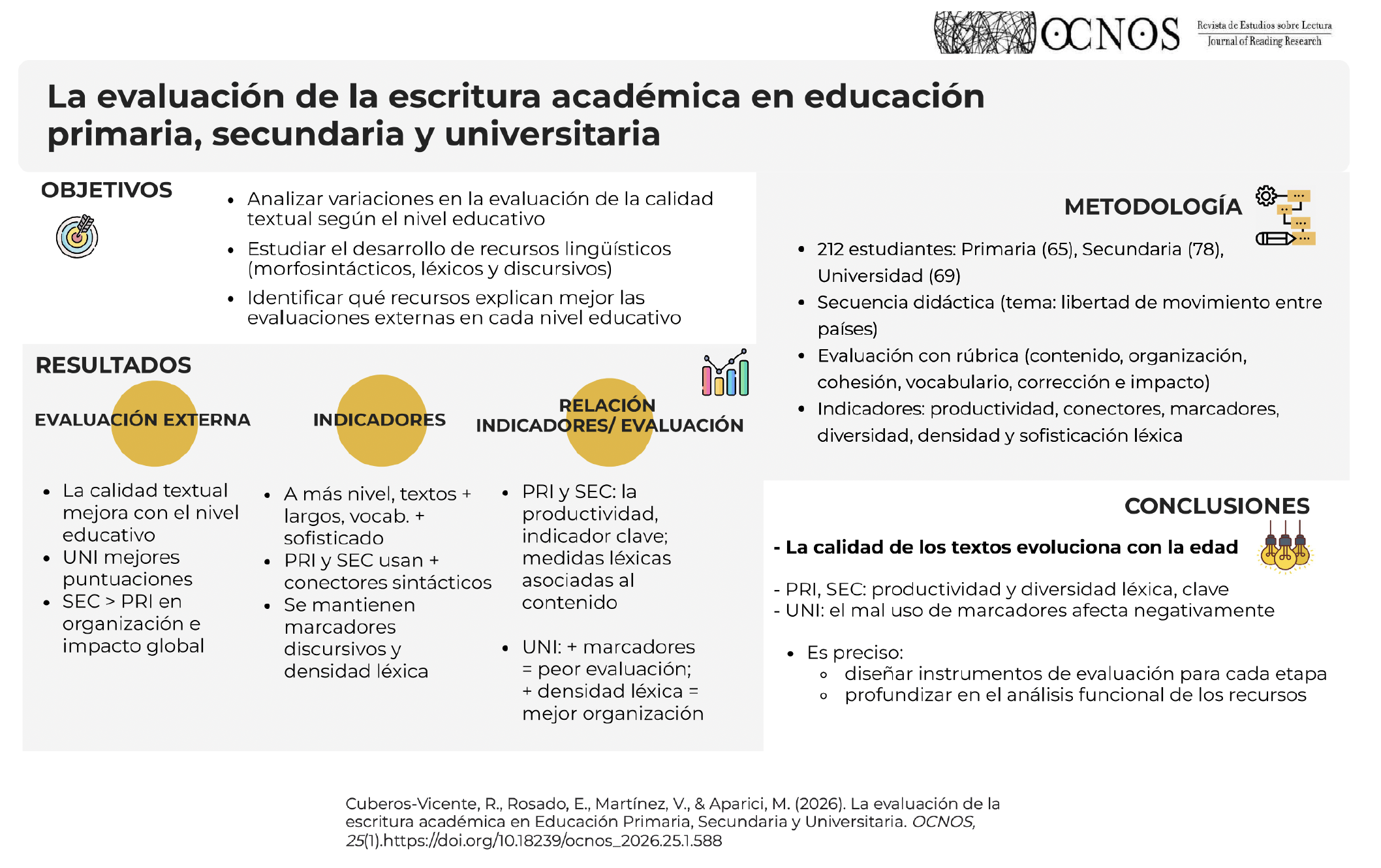
Mastering the linguistic skills required in academic writing becomes a challenge at all educational stages. The present study analyses the relationship between the use of linguistic resources and the perceived quality of academic texts with the aim of developing valid instruments for the assessment of text quality. A total of 212 argumentative-expository texts from 65 primary school pupils, 78 secondary school pupils, and 69 university students were analysed. In a first analysis, the morphosyntactic, lexical, and discursive resources of texts were coded. In a second phase, teachers at each educational level evaluated them with an analytical rubric designed to assess linguistic and rhetorical aspects. The results showed a developmental increase in most of the linguistic features analysed, except for the proportion of discourse markers and lexical density. External evaluations showed greater variability in primary and secondary education than at university level, although scores did increase with educational level. The perceived quality of the texts was associated with different features at each level: while productivity was strongly linked to higher scores in primary and secondary education, in higher education a negative correlation emerged between the use of discourse markers and teacher evaluations. These findings will inform the design of evaluation instruments tailored to the specific requirements of each educational stage.
Downloads
Download data is not yet available.
Article Details
How to Cite
Cuberos-Vicente, R., Rosado, E., Martínez, V., & Aparici, M. (2026). Assessing academic writing in Primary, Secondary, and Higher Education. Ocnos. Journal of reading research, 25(1). https://doi.org/10.18239/ocnos_2026.25.1.588
Cuberos-Vicente, Rosado, Martínez, and Aparici: Assessing academic writing in Primary, Secondary, and Higher Education
Introduction
Reading a text almost inevitably involves evaluating its quality. As readers, our
perception is shaped by factors ranging from the interest of the topic to the information
provided or, crucially, the way in which this information is presented and structured.
In general terms, evaluating a text is a fairly intuitive process. However, from the
specialised perspective of researchers or teachers, text quality is reflected both
in more or less subjective overall assessments, and in the observation of specific
analytical criteria (; ). Furthermore, because the quality of a text is closely tied to its communicative
effectiveness and to genre-specific expectations, it can partly be explained by examining
its linguistic characteristics (). This study examines the alignment between researcher-based indicators of text quality
and teacher-based assessments in texts produced by primary, secondary and university
students.
In academic contexts, mastering the language skills required to produce high-quality
texts is a challenge at all educational stages. Difficulties in the production of
academic writing can lead to issues related to school, social and/or professional
integration (). Entering academic life entails becoming familiar with the conventions and language
characteristics of texts, predominantly expository and/or argumentative, that are
produced in academic settings (; ). Although these genres are introduced in primary education and receive explicit
attention in compulsory and post-compulsory secondary education, students continue
to struggle with the appropriate use of linguistic resources and discursive strategies
specific to academic texts when they transition to university. This remains a concern
for teachers across levels and subjects, as difficulties in writing academic texts
persist even beyond undergraduate level (; ). Developing reliable tools to assess such texts is therefore essential for supporting
children, adolescents, and adults in learning the features of academic writing. This
study examines how specific linguistic characteristics influence readers’ assessments
of text quality. It focuses on analytical texts, those focused on analysis and argumentation
(; ) which typically combine both expository and argumentative components (), and are commonly produced in academic settings. Compared with cognitively less
demanding discourse genres (e.g., narratives), analytical texts require writers to
articulate their point of view on a topic, present arguments for and against it, and
offer appropriate evidence and/or possible refutations (). Such demands make analytical texts particularly challenging for writers across
ages/educational levels (). While the organisation of written narratives tends to be mastered by the age of
10, analytical writing requires an advanced use of grammatical, lexical, and discursive
forms and functions, which are acquired later in life (). In these texts, authors are expected to use diverse yet precise vocabulary, to
condense information through complex syntax, and organise discourse using intra- and
inter-sentential connectivity devices that signal both textual transitions and author's
stance (; ; ).
Previous studies have identified which lexical, morphosyntactic, and discourse resources
serve as indicators of text quality and have examined how these indicators related
to one another throughout development (; ; ; ). However, the extent to which these elements influence text evaluation, i.e., how
the use of specific features affects external judges’ perceptions of ‘quality’ has
not been examined from a developmental perspective.
An initial exploration of the relationship between linguistic indicators of text quality
and external evaluations of this corpus was conducted in which analysed how aspects directly related to the content and structure of the texts
helped explain perceived quality as judged by expert raters. also explored which textual features predict teachers' evaluations, noting that they
vary by educational level and/or exposure to specific pedagogical work. However, these
studies only focused on the relationship between linguistic indicators and holistic
evaluations.
Objectives
This study analyses the quality of analytical texts produced by students in primary,
secondary and higher education, with the specific aim of:
1. Examining potential variation in the external evaluation of text quality across
educational levels.
2. Analysing the development of a set of linguistic resources identified as indicators
of text quality, comparing their use in texts across educational levels.
3. Determining which of these linguistic resources best account for external assessments
of text quality at each educational level.
Methods
Participants
A total of 212 students from three educational levels participated in this study:
6th grade primary school (n=65), 4th grade secondary school (n=78), and 1st and 2nd
year university students (n=69). The texts were collected in León and Ciudad Real,
in two primary schools, three secondary schools, and at the University of León. Table 1 shows the mean, standard deviation, age range, and sex distribution of the participants.
Table 1Average age, age range and sex of participants by educational level
Educational level
M Age (SD)
Age range
Participants
Male
Female
Total
Primary education
11.6 (0.28)
11.1–12.1
30
35
65
Secondary education
15.8 (0.67)
15.0–18.3
33
45
78
Higher education
21 (2.31)
19.10–31.8
27
42
69
Procedure
Writing task
During a teaching sequence designed to improve skills related to the production of
analytical texts, participants wrote five texts on a computer, each within a maximum
of 30 minutes, and no word limit. The teaching sequence was implemented over seven
sessions in the regular classroom by the students’ regular teachers, who had received
specific training beforehand. The pedagogical activities included readings on the
topic of the sequence—freedom of movement between countries—, class discussions on
the characteristics of analytical texts, and peer-assessment tasks (see ). This study analyses text 4, which was produced immediately after the pedagogical
activities. Text 4 was selected because participants had already read and written
about this topic during the teaching sequence, ensuring that the texts were produced
with identical instructions and within a controlled pedagogical context ().
External evaluation of text quality
Nine experienced teachers from each educational level participated in the evaluation.
They were provided with an analytical rubric comprising six assessment criteria: content,
organisation, cohesion, vocabulary, correctness, and communicative impact. This rubric
was developed as part of the Analytical Writing and Linguistic Diversity project (EDU2015-65980-R) (IP: J. Perera and L. Tolchinsky). Table 2 provides a description of the aspects evaluated in each criterion.
Table 2Description of analytical criteria
Criterion
Description
Content
Relevance and appropriateness of the text's content in relation to the proposed topic.
Organisation
Organisation of the content, with particular attention to how the different parts
of the text are ordered and differentiated.
Cohesion
Connection between ideas within and between sentences is evaluated.
Vocabulary
Vocabulary appropriateness relative to the type of text is assessed, as well as lexical
richness.
Correctness
Number of spelling, grammatical, and punctuation errors, and assessing their impact
on comprehension.
Communicative impact
Clarity of the expressed point of view and the quality of the supporting evidence
are assessed.
Teachers were asked to score each of these criteria, and to assign a global score
to the text on a Likert scale from 1 to 5, where 5 was the highest score. Texts containing
fewer than 40 words were assigned a score of 1 on all criteria because they were deemed
too short for evaluation. Only two primary school participants were excluded from
the analysis.
Assessment reliability was calculated on 20% of the texts using Cronbach's alpha coefficient.
Significant agreement was reached among judges at all educational levels (α ≥ .881 for all scores) ().
Linguistic indicators of text quality
Morphosyntactic, lexical, and discourse-level measures, along with a measure of productivity,
were obtained from the texts to analyse linguistic features previously linked to text
quality.
- Productivity. Refers to the length of the text and was calculated based on the total
number of words.
- Use of syntactic connectors. Refers to coordinating and subordinating conjunctions
that connect clauses (intra-sentential connectivity devices). Their proportion was
calculated relative to the total number of clauses.
- Use of discourse markers. Refers to connectivity devices that do not serve a syntactic
function in clause predication but rather create supra-sentential links that contribute
to textual cohesion (extra-sentential connectivity devices). Their identification
followed , and their proportion was calculated relative to the total number of clauses.
- Lexical diversity. Refers to the variety of different words used in a text and was
calculated using the D index, which —unlike other indices— is not affected by text
length ().
- Lexical density. Refers to the proportion of content words in relation to the total
number of words, providing insight into the information density of a text ().
- Lexical sophistication. Refers to the use of less common and more advanced words.
It was calculated using the average length of words with semantic content, based on
the premise that as word length increases, their occurrence decreases ().
Data analysis
The texts were transcribed in CHAT format and analysed using CLAN programmes from
the CHILDES project (). The FREQ tool was used to determine the frequency of count variables, VOCD to calculate
lexical diversity, and WDLEN to obtain mean word length. The texts were segmented
into clauses based on the criteria of , as adapted for Spanish by , and were morphosyntactically tagged using MOR and POST.
ANOVAs were conducted with educational level as between-subjects factor to analyse
how external evaluation scores evolve and how the use of linguistic indicators of
text quality varies across levels. Effect sizes were calculated using the eta-square
value (). Pairwise comparisons were conducted; Tukey's and Games-Howell's corrections were
applied when the data did not meet the homoscedasticity criterion. Effect sizes were
calculated using Cohen's d ().
To address the third objective, examining the relationship between linguistic indicators
and text quality assessments, a series of Pearson correlations was conducted for each
educational level. Regression analyses were then performed separately for each assessment
criterion and for each educational level. Only indicators that significantly correlated
with quality assessment scores were included as explanatory variables. The percentage
of explained variance was determined using the adjusted R-squared coefficient (adjusted
R2), and the explanatory power of each variable was determined using the standardised
beta coefficient (β).
Results
The results have been divided into three subsections: the external evaluation of text
quality by educational level; the use of linguistic indicators of text quality by
educational level; and the relationship between external evaluations and linguistic
indicators.
External evaluation of text quality by educational level
Educational level had a significant effect on all text quality scores, increasing
with age. Table 3 shows the descriptive statistics, F values, and effect sizes. Results of pairwise comparisons are also included.
Table 3Descriptive statistics (mean (M) and standard deviation (SD)), F value, and effect
size for text quality scores by educational level
Note Values with the same superscripts are significantly different at p<.05;
*** p< .001.
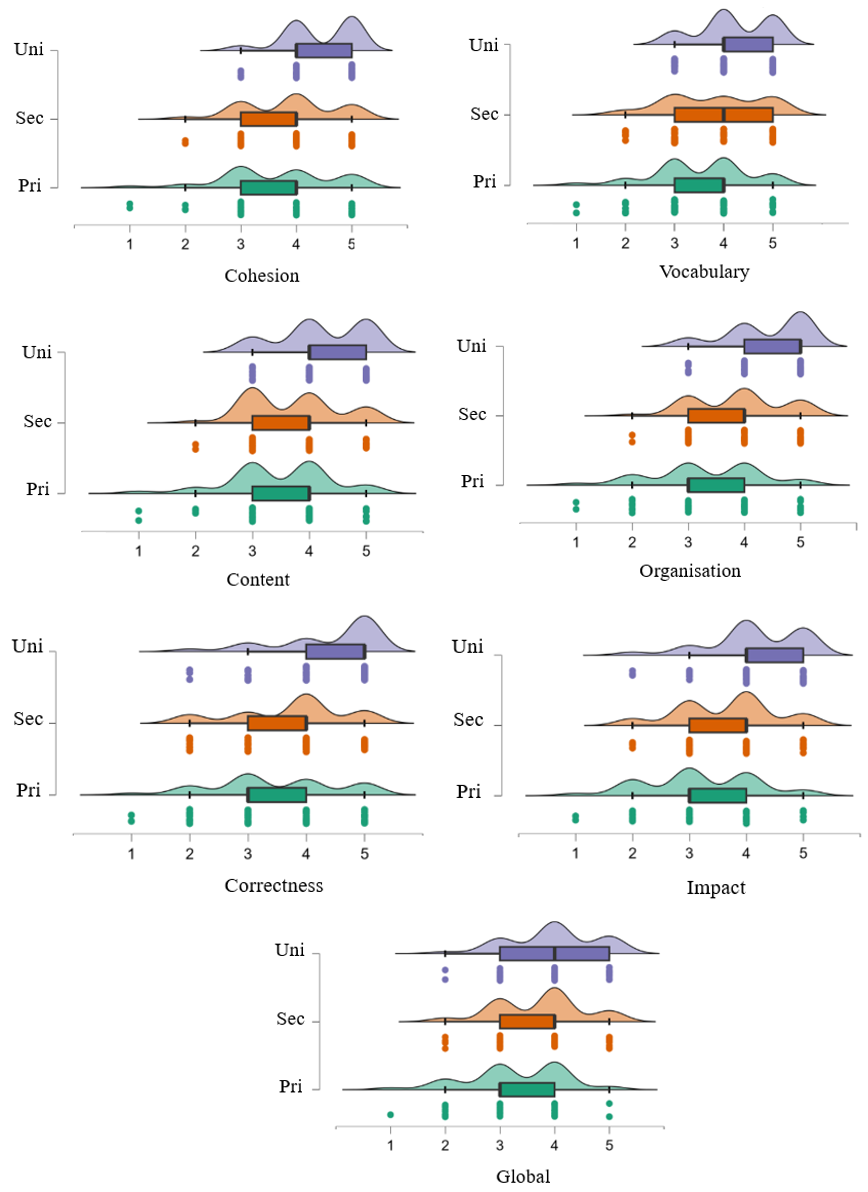
Figure 1 presents text quality scores by educational level. Across all criteria, higher education
participants scored higher on average than the other groups. Secondary school students
also scored higher on average than primary school students. Variability was low at
all educational levels, although it was slightly higher in primary school.
Figure 1Distribution of text quality scores by educational level
The results of the post-hoc tests indicated that primary school students received significantly lower scores
than secondary school students only in organisation (p<.001; d=0.69), impact (p<.001; d= 0.54) and the global score (p< .001; d=0.55). They also scored significantly lower compared to higher education students
across all evaluated aspects (content: p< .001; d=0.91; organisation: p<.001; d=1.30; cohesion: p<.001; d=0.93; vocabulary: p< .001; d=0.76; correctness: p<.001; d=0.94; impact: p<.001; d=1.10; global score: p<.001; d=0.85). Secondary school students also received significantly lower scores than university
students across all criteria (content: p<.001; d=0.61; organisation: p<.001; d=1.30; cohesion: p<.001; d=0.66; vocabulary: p<.05; d=0.44; correctness: p<.001; d=0.64; impact: p<.01; d=0.56), with the exception of the global score.
Use of linguistic indicators of text quality by educational level
Educational level had a significant effect on most linguistic indicators, with effect
sizes ranging from small to medium. Table 4 shows the descriptive statistics, F values, and effect sizes. Results of pairwise comparisons are also included.
Table 4Descriptive statistics (mean (M) and standard deviation (SD)), F value, and effect
size for linguistic indicators
Note Values with the same superscripts are significantly different at p<.05;
** p<.01;
*** p<.001.
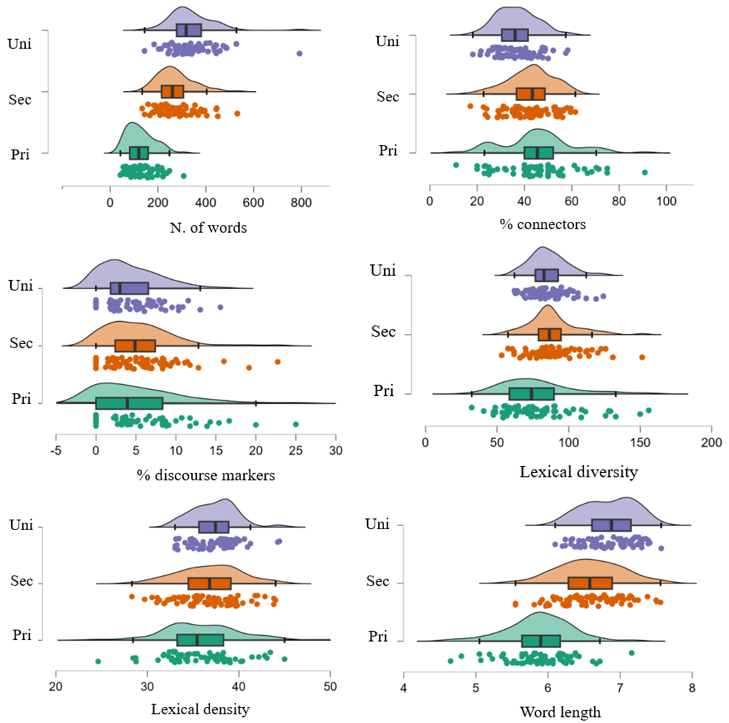
Figure 2 presents the use of indicators by educational level. As shown, text length increases
steadily with educational level. Moreover, for nearly all indicators, university students
consistently outperform younger groups, except in the use of syntactic connectors,
where the opposite is observed: primary school students produce a greater number of
connectors than older students. Similarly, primary school students exhibit greater
variability in performance than secondary and higher education students across all
analysed measures.
Figure 2Distribution of linguistic indicators by educational level
Post-hoc tests showed a significant increase in text-length with educational level (primary
vs. secondary: p<0.001; d=1.86; primary vs. university: p<0.001; d=2.68; secondary vs. university: p<0.001; d=0.82).
Regarding the use of connectors, both primary and secondary school students produced
a significantly higher proportion of connectors than university students (primary
vs. university: p<.001; d=0.77; secondary vs. university: p<.01; d=0.53), though no significant differences were observed between primary and secondary
school groups. Unlike what was observed for syntactic connectors, no significant effect
of educational level was found for discourse markers, indicating that their proportion
does not change with age.
As for lexical measures, lexical diversity increased with age, although significant
differences were observed only between primary and secondary school students (p<.05; d=0.55). Meanwhile, average word length increased significantly with educational level
(primary vs. secondary: p<.001; d=1.67; primary vs. university: p<.001; d=2.32; secondary vs. university: p<.001; d=0.64). Finally, lexical density was not affected by educational level, remaining
stable across groups.
Relationship between text quality assessment and linguistic indicators
The relationship between text quality assessments (analytical criteria and global
evaluation) and linguistic indicators varies across educational levels. Except for
correctness scores, which do not show significant correlations with any of the resources
in any group, all other assessment criteria were associated with at least some linguistic
indicator at one or more educational levels. Figures 3, 4, and 5 show the correlation results for each level. Based on these correlations, separate
regression models were tested for each assessment within each group.
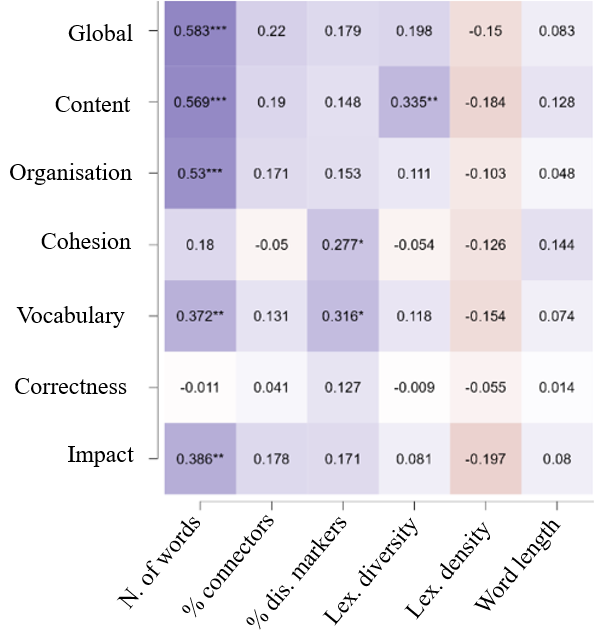
In primary school, all scores except correctness showed significant correlations with
at least one linguistic resource. Text length significantly and positively correlated
with most of the text quality criteria, as well as with global evaluation, indicating
that longer texts tended to receive higher scores.
Figure 3Correlation between scores and linguistic indicators in primary education
In fact, the only indicator that correlated significantly with the global score was
the number of words (r=.583). Therefore, the regression model tested included productivity as the only predictive
variable. This model proved to be significant, F(1.63)=32.466; R2=.331; p<.001, explaining 33.10% of the overall score. Text length contributed significantly
and positively to the model (β=0.583; p< .001).
Regarding the content criterion, it correlated significantly with text length (r= .569) and lexical diversity (r= .335). Thus, the regression model included both indicators as predictive variables.
The model was also significant, F(2.61)=17.929; R2=.350; p<.001, accounting for 35% of the variance. Both lexical diversity (β=0.267) and text length (β=0.512) contributed positively to the model (p< .05).
Regarding organisation, only text length correlated significantly (r= .530). The regression
model was significant, F(1.63)= 24.674; R2= .281; p<.001, explaining 28.1% of the variance. Text length contributed significantly
and positively to the model (β=0.530; p< .001).
With regard to cohesion scores, these only correlated significantly with the proportion
of discourse markers (r=.277). The model was significant, F(1.63)=5.237; R2=.062; p<.025, explaining 6.2% of the variance in cohesion scores. The proportion of markers
contributed significantly to the model (β=0.277; p=.025).
With respect to vocabulary, two significant correlations were found with text length
(r=.372) and with the proportion of discourse markers (r=.316). The regression model was also significant, F(2.63)=5.280; R2=.118; p=.008, and explained 11.8% of the variance in scores, although only text length contributed
significantly (β=0.361; p=.003).
Finally, the scores given for communicative impact only correlated with text length
(r=.386). The tested model was significant, F(1.63)=11.008; R2=.149; p=.002, explaining 14.9% of the variance. Text length contributed significantly (β=0.386; p=.002).
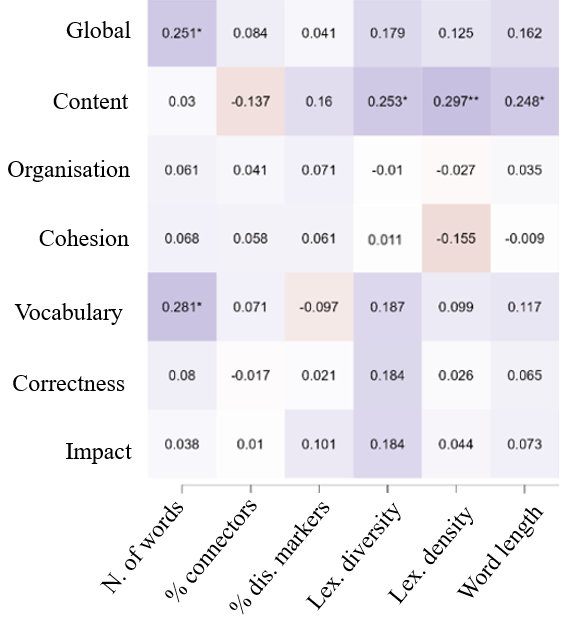
In secondary school, fewer significant correlations were observed between linguistic
resources and text quality scores. Significant correlations emerged only for the global
score, and for the content and vocabulary scores.
Figure 4Correlation between scores and linguistic indicators in secondary education
In relation to the global score, as in primary education, text length was the only
indicator that correlated significantly with this variable (r=.251). The tested model was also significant, F(1.76)=5.123; R2=.051; p=.026, but it only explained 5.10% of the variance. Text length significantly contributed
to the model (β=0.251; p<.026).
Content scores correlated significantly with all lexical indicators: lexical diversity
(r=.297), lexical density (r=.297), and average word length (r=.248). The model was significant, F(3.74)=3.420; R2=.086; p<.001, explaining 8.6% of the variance; however, none of these indicators contributed
significantly to the model.
Finally, vocabulary scores correlated significantly with text length (r=.281). The model tested was significant, F(1.76)=6.512; R2=,067; p<.013, accounting for 6.7% of the variance. The number of words contributed significantly
to the model (β=0.281; p=.013).
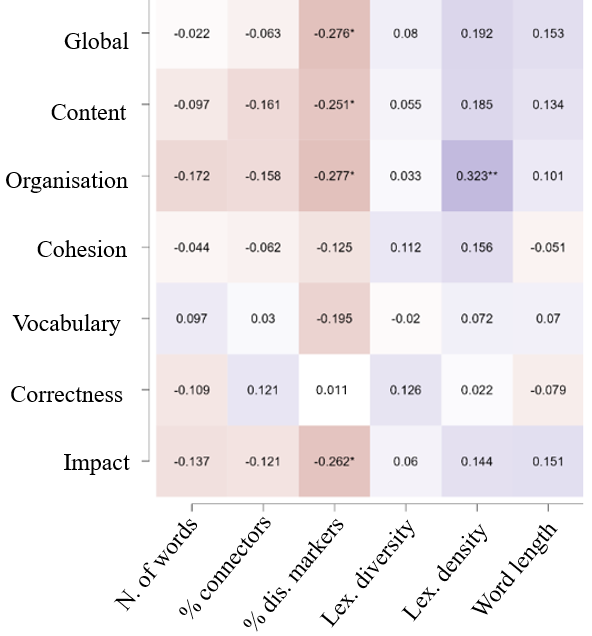
As in secondary education, fewer significant correlations were found in higher education
between linguistic resources and text quality scores. Significant correlations were
observed for the global score, and for the content, organisation, and impact scores.
In contrast with the younger age groups, text length did not correlate significantly
with any of the scores in higher education.
Figure 5Correlation between scores and linguistic indicators in higher education
With respect to the global score, the only significant correlation was with the proportion
of discourse markers, which was negative (r=-.298). The model was significant, F(1.67)=6.508; R2=.089; p=.013, explaining 8.90% in global scores. The proportion of discourse markers contributed
negatively to the model (β=-0.298; p=.013).
Content scores also correlated negatively with the proportion of discourse markers
(r=.271). The tested model was significant, F(1.67)=5.329; R2=.074; p<.001, accounting for 7.4% of the variability in content scores. Again, the proportion
of discourse markers also contributed negatively to the model (β=-0.271, p=.024).
Regarding organisation scores, a negative correlation was observed with the proportion
of discourse markers (r=-293), and a positive correlation with lexical density (r=.332). The model was also significant, F(2. 66)=6.122; R2=.156; p<.004, explaining 15.6% of the variance in organisation scores. Both lexical density
(β=0.275) and the proportion of discourse markers (β=-0.222) contributed significantly (p<.05), albeit in opposite directions: lexical density had a positive effect, while
the proportion of discourse markers had a negative effect.
Finally, for communicative impact, a negative correlation with the proportion of discourse
markers was again observed (r=-.273). The model was significant, F(2.63)=7.333; R2=.118; p<.008, explaining 11.8% of the variance. Once again, the proportion of discourse markers
contributed negatively to the model (β=-0.273; p=.023).
Discussion
This study analysed the quality of analytical texts written by primary, secondary,
and higher education students. First, it examined the text quality assessments made
by expert teachers at these educational levels; second, it explored the development
of a set of linguistic indicators of text quality across educational levels. In addition,
the relationship between these two types of assessments was analysed to identify the
indicators that best explain teachers' evaluations.
Regarding the first objective, which focused on variations in teachers’ assessments,
the results indicate that the highest-rated texts were those produced by university
students, except for the global score, where no significant differences were observed
between secondary and higher education. This finding could indicate that, although
university students outperform younger students in specific linguistic and textual
dimensions, teachers prioritise more general aspects, such as clarity or coherence,
when assigning a global evaluation. Alternatively, this pattern may reflect teachers’
adjustments of expectations and, thus of their evaluations to the educational level
being assessed (; ). Primary and secondary school students received similar ratings for most dimensions
evaluated, with the exception of impact, organisation, and the global score, where
primary school students received lower evaluations. This suggests that certain macrostructural
and rhetorical aspects typical of to this type of text begin to be explicitly assessed
from secondary school onwards. At this stage, students’ texts increasingly exhibit
features typical of expository genres, whose production relies on linguistic resources
used that differ from those used in earlier-acquired genres, such as narrative texts
(; ).
With respect to our second objective, to analyse the development of a set of linguistic
indicators of text quality, the results show differences in nearly all the linguistic
resources analysed across educational levels, although each indicator follows a distinct
developmental pattern. Consistent with previous research, students at higher educational
levels produce longer texts and use a more sophisticated and diverse vocabulary. These
findings provide further evidence that text length, lexical diversity, and lexical
sophistication—often operationalised as the use of longer words—are indicators of
academic development (; ; ). Despite the increase in productivity and the use of more sophisticated and diverse
vocabulary associated with educational advancement, lexical density remains stable.
This pattern has been reported in previous studies in Spanish (; ; ) and Catalan (), but it contrasts with results from English, Hebrew, and Swedish (; ). These divergent trends could reflect typological differences between languages
(), such as the degree to which rely on independent function words rather than on bound
morphemes to encode grammatical relations. In the case of connective devices, distinct
patterns of development were identified. While the proportion of discourse markers
remains consistent across educational levels, the proportion of syntactic connectors
decreases with age. These findings extend the developmental trend documented in a
parallel study for Catalan () and may be attributable to several factors. Firstly, the decrease in the use of
syntactic connectors among university students is consistent with claim that cohesion is not necessarily achieved through the abundant use of connectors.
Therefore, this downward trend—or the absence of developmental differences—could indicate
university students rely on alternative cohesive mechanisms. In fact, the optional
nature of discourse markers, which is one of the rhetorical options available to writers,
could partly account for this behaviour. Another possible explanation is that the
present study did not distinguish between the different discursive functions (e.g.,
structuring or modalisation) performed by these markers, which could reveal age-related
differences (). In addition, non-conventional discourse markers —i.e. multi-word units that perform
the same functions as traditional discourse markers but are not categorised as such
(; )— were not analysed. Nor were non-canonical uses of the analysed markers identified,
that is, grammatically or semantically inappropriate uses within the discourse context.
Regarding the third objective —identifying which linguistic resources explain variations
in teachers' assessments of text quality— the results show clear differences across
educational level. In primary school, text length emerges as the indicator of text
quality par excellence, accounting for variations in the scores for all assessed aspects,
except correctness. Consistent with previous studies (; ), this finding suggests that producing longer texts entails the use of additional
linguistic resources that enable writers to articulate more precise arguments and
reasoning. At this level, a positive association was also observed between lexical
diversity and content scores, suggesting that writers who use a more varied vocabulary
tend to engage more deeply with the topic. Furthermore, increases in the use of discourse
markers were associated with higher vocabulary and cohesion scores, which corroborates
previous findings that more cohesive texts tend to receive higher evaluations (). The use of discourse markers, though, is not associated with organisation scores,
which may suggest that teachers value their cohesive function but may not view them
as central to the overall organisation of the text. Surprisingly, the use of syntactic
connectors, traditionally linked to textual cohesion (), was not associated with either cohesion or organisation scores. These results highlight
the need for future research to incorporate functional criteria that allow for a more
nuanced discussion of the discursive value of these markers ().
In secondary school, a similar pattern emerges regarding the relationship between
text length and teacher assessments: content, vocabulary, and global scores all increase
as text length increases. These results suggest that productivity remains a key factor
in assessing text quality at this stage of schooling (; ). At this level, all lexical measures are positively associated with content scores,
and lexical diversity also contributes to global evaluations. This indicates that
students’ lexical repertoire is particularly relevant to the assessment of text quality
during secondary education. However, neither the use of discourse markers nor the
use of syntactic connectors is associated with teacher scores, reinforcing the need
for further research on the characterisation of connective devices based on functional
criteria.
In higher education, however, productivity is not directly associated with teacher
evaluations. This suggests that, once the minimum length needed to articulate a viewpoint
is achieved, evaluators can begin to focus on aspects other than text length when
judging writing quality. Surprisingly, a greater use of discourse markers is negatively
associated with most text quality scores, which leads us to hypothesise that some
of these markers are semantically or discursively inappropriate. Such non-canonical
uses, noted in earlier studies (; ), warrant detailed examination in future research. At this educational level, a positive
association was also found between lexical density and text organisation, suggesting
that structural organisation may be facilitated by an increased information density
().
Overall, teachers do not seem to apply the same evaluation criteria across educational
levels, although certain aspects—such as productivity and lexical diversity—remain
stable predictors of text quality in primary and secondary education.
One aim for future research is to provide a more comprehensive analysis of the nature
of the discourse markers used in the texts. This would enable us to more fully understand
the discrepancies between the forms used and their contextual functions, in line with
the work of and . Furthermore, we consider it advisable for teachers to evaluate texts from different
educational levels, rather than limiting themselves to those from the educational
level at which they teach. This approach would help clarify how perceptions of text
quality may vary depending on teachers' experience and educational context. It could
also yield valuable insights for designing and implementing differentiated teaching
strategies for written language instruction.
Conclusions
This study confirms that the quality of written academic texts develops progressively
across educational levels, both in terms of the use of linguistic resources and of
teacher evaluation. In primary and secondary education, productivity and lexical diversity
emerge as the most relevant indicators, whereas in higher education, the inappropriate
use of discourse markers can negatively influence perceptions of text quality. These
findings underscore the need to develop assessment tools that are aligned with each
educational level, as well as the need for a more in-depth functional analysis of
the linguistic resources used by the students, particularly at more advanced levels.
Contribution of the authors
Rocío Cuberos-Vicente: Formal analysis; Conceptualisation; Data curation; Writing - original draft; Writing
- revision and editing; Research; Methodology; Resources; Supervision; Validation;
Visualisation; Fund acquisition.
Elisa Rosado: Project management; Conceptualisation; Writing - original draft; Writing - revision
and editing; Research; Methodology; Resources; Supervision; Validation.
Verónica Martínez: Formal analysis; Conceptualisation; Data curation; Writing – original draft; Writing
– review and editing; Research; Methodology; Supervision; Validation; Visualisation.
This study was funded by the Ministry of Science, Innovation and Universities (PID2020-119555GA-I00;
I.P.: M. Aparici) and by a Margarita Salas postdoctoral grant awarded to Rocío Cuberos-Vicente
by the University of Barcelona and funded by Next Generation EU and the Ministry of
Universities.
Declaration
A previous version of this study was presented at the 33rd International Congress
of the Spanish Association of Speech Therapy, Phoniatrics and Audiology and the Ibero-American
Association of Speech Therapy held in Santander from 28 to 30 September 2023. The
abstract was published in the special volume 43(1) of the Journal of Speech Therapy, Phoniatrics and Audiology. https://doi.org/10.1016/j.rlfa.2023.100372.
References
1
Alonso-Chacón, P. J. (2019). Uso de marcadores discursivos en el discurso académico oral y escrito de estudiantes
universitarios costarricenses [Tesis doctoral, Universitat de Barcelona]. https://hdl.handle.net/2445/151342
2
Aparici, M. (2010). El desarrollo de la conectividad discursiva en diferentes géneros y modalidades de
producción [Tesis doctoral, Universitat de Barcelona].
3
Aparici, M., Cuberos, R., Salas, N., & Rosado, E. (2021). Linguistic indicators of
text quality in analytical texts: developmental changes and sensitivity to pedagogical
work. Journal for the Study of Education and Development, 44(1), 9-46. https://doi.org/10.1080/02103702.2020.1848093
4
Aparici, M., Rosado, E., Vilar, H., Cuberos, R., & Tolchinsky, L. (2024). The influence
of students’ linguistic condition, school level, and pedagogical input on analytical
essay features. Frontiers in Language Sciences, 3, 1480422. https://doi.org/10.3389/flang.2024.1480422
5
Berman, R. A., & Nir-Sagiv, B. (2010). The lexicon in writing–speech–differentiation.
Developmental perspectives. Written Language and Literacy, 13(2), 183-205. https://doi.org/10.1075/wll.13.2.01ber
6
Berman, R. A., & Slobin, D. I. (1994). Relating events in narrative: A crosslinguistic developmental study. Erlbaum. https://doi.org/10.4324/9780203773512
7
Berman, R. A., & Verhoeven, L. (2002). Cross-linguistic perspectives on the development
of text production abilities: Speech and writing. Written Language and Literacy, 5(2), 1-43. https://doi.org/10.1075/wll.5.1.02ber
Crossley, S. A., & McNamara, D. S. (2010). Cohesion, coherence, and expert evaluations
of writing proficiency. En S. Ohlsson y R. Catrambone (Eds.), Proceedings of the 32nd Annual Conference of the Cognitive Science Society (pp. 984-989). Cognitive Science Society. https://escholarship.org/uc/item/6n5908qx
10
Crossley, S. A., Weston, J., McLain-Sullivan, S. T., & McNamara, D. S. (2011). The
development of writing proficiency as a function of grade level: A linguistic analysis.
Written Communication, 28(3), 282-311. https://doi.org/10.1177/0741088311410188
Cuenca, M. J. (2013). The fuzzy boundaries between discourse marking and modal marking.
En L. Degand, B. Cornillie y P. Pietrandrea (Eds.), Discourse markers and modal particles. Categorization and description (pp. 181-216). John Benjamins. https://doi.org/10.1075/pbns.234
13
Field, A. (2009). Discovering statistics using SPSS (and sex and drugs and rock'n'roll) (3ª Ed.). SAGE Publications.
14
Galiana-Bea, P., Gras-Manzano, P., Rosado, E., & Mañas-Navarrete, I. (2024). Marcadores
discursivos y otros mecanismos de marcación discursiva. Una propuesta holística para
el análisis de narraciones orales en español como lengua extranjera. Rilce, 40(3), 937-69. https://doi.org/10.15581/008.40.3.937-69
Johansson, V. (2009). Lexical diversity and lexical density in speech and writing:
A developmental perspective. Working Papers Lund University, 53, 61-79. https://journals.lub.lu.se/LWPL/article/view/2273
18
Llauradó, A., & Tolchinsky, L. (2013). Growth of text-embedded lexicon in Catalan:
From childhood to adolescence. First Language, 33(6), 628-653. https://doi.org/10.1177/0142723713508861
19
López-Ferrero, C., & Atienza-Cerezo, E. (2006). Las conjunciones paratácticas en el
Corpus 92. En E. Bernal y J. A. DeCesaris (Eds.), Palabra por palabra: estudios ofrecidos a Paz Battaner (pp. 147-160). Universitat Pompeu Fabra, Institut Universitari de Lingüística Aplicada.
http://hdl.handle.net/10230/23683
20
MacWhinney, B. (2000). The CHILDES Project: Tools for analyzing talk (3ª Ed.). Erlbaum.
21
Malvern, D., Richards, B., Chipere, N., & Durán, P. (2004). Lexical diversity and language development. Quantification and assessment. Palgrave MacMillan. https://doi.org/10.1057/9780230511804
22
Martín-Zorraquino, M. A., & Portolés-Lázaro, J. (1999). Los marcadores del discurso.
En I. Bosque, & V. Demonte (Eds.), Gramática descriptiva de la lengua española (Vol. 3, pp. 4051-4213). Espasa Calpe.
23
McMaster, K., & Espin, C. (2007). Technical features of curriculum–based measurement
in writing. The Journal of Special Education, 41(2), 68-84. https://doi.org/10.1177/00224669070410020301
24
McNamara, D. S., Crossley, S. A., & McCarthy, P. (2010). Linguistic features of writing
quality. Written Communication, 27(1), 57-86. https://doi.org/10.1177/0741088309351547
25
Rosado, E., Mañas-Navarrete, I., Yúfera-Gómez, I., & Aparici-Aznar, M. (2021). El
desarrollo de la escritura analítica: aprender a enlazar la información, aprender
a posicionarse. Pensamiento Educativo, 58, 1-18. https://doi.org/10.7764/PEL.58.2.2021.10
26
Salas, N., Llauradó, A., Castillo, C., Taulé, M., & Martí, M. A. (2016). Linguistic
correlates of text quality from childhood to adulthood. En J. Perera, M. Aparici,
E. Rosado, & N. Salas (Eds.), Written and spoken language development across the lifespan. Essays in honour of Liliana
Tolchinsky (pp. 307-326). Springer. https://doi.org/10.1007/978-3-319-21136-7_18
27
Schleppegrell, M. J. (2004). The language of schooling. a functional linguistics perspective. Lawrence Erlbaum. https://doi.org/10.4324/9781410610317
Strömqvist, S., Johansson, V., Kriz, S., Ragnarsdóttir, H., Aisenman, R., & Ravid,
D. (2002). Toward a cross-linguistic comparison of lexical quanta in speech and writing.
Written Language and Literacy, 5(1), 45-67. https://doi.org/10.1075/wll.5.1.03str
30
Tolchinsky, L., Aparici-Aznar, M., & Rosado, E. (2017). Escribir para pensar y persuadir.
Textos de Didáctica de la Lengua y la Literatura, 76, 14-21. https://hdl.handle.net/2445/122119
31
Tolchinsky, L., Aparici, M., & Vilar, H. (2021). Macro– and micro–developmental changes
in analytical writing of bilinguals from elementary to higher education. International Journal of Bilingual Education and Bilingualism, 25(7), 2511-2526. https://doi.org/10.1080/13670050.2021.1923643
32
Tolchinsky, L., Rosado, E., & Aparici, M. (2023). Internal and external appraisals
of analytical writing. A proposal for assessing development and potential improvement.
International Review of Applied Linguistics in Language Teaching, 62, 5-36. https://doi.org/10.1515/iral-2023-0012
Uccelli, P. (2023). Midadolescents’ language learning at school: Toward more just
and scientifically rigorous practices in research and education. Language Learning, 73(2), 182-221. https://doi.org/10.1111/lang.12558
35
Uccelli, P., Deng, Z., Phillips-Galloway, E. P., & Qin, W. (2019). The role of language
skills in midadolescents’ science summaries. Journal of Literacy Research, 51(3), 357-380. https://doi.org/10.1177/1086296X19860206
36
Uccelli, P., Dobbs, C. L., & Scott, J. (2012). Mastering academic language: organization
and stance in the persuasive writing of high school students. Written Communication, 30(1), 36-62. https://doi.org/10.1177/0741088312469013